
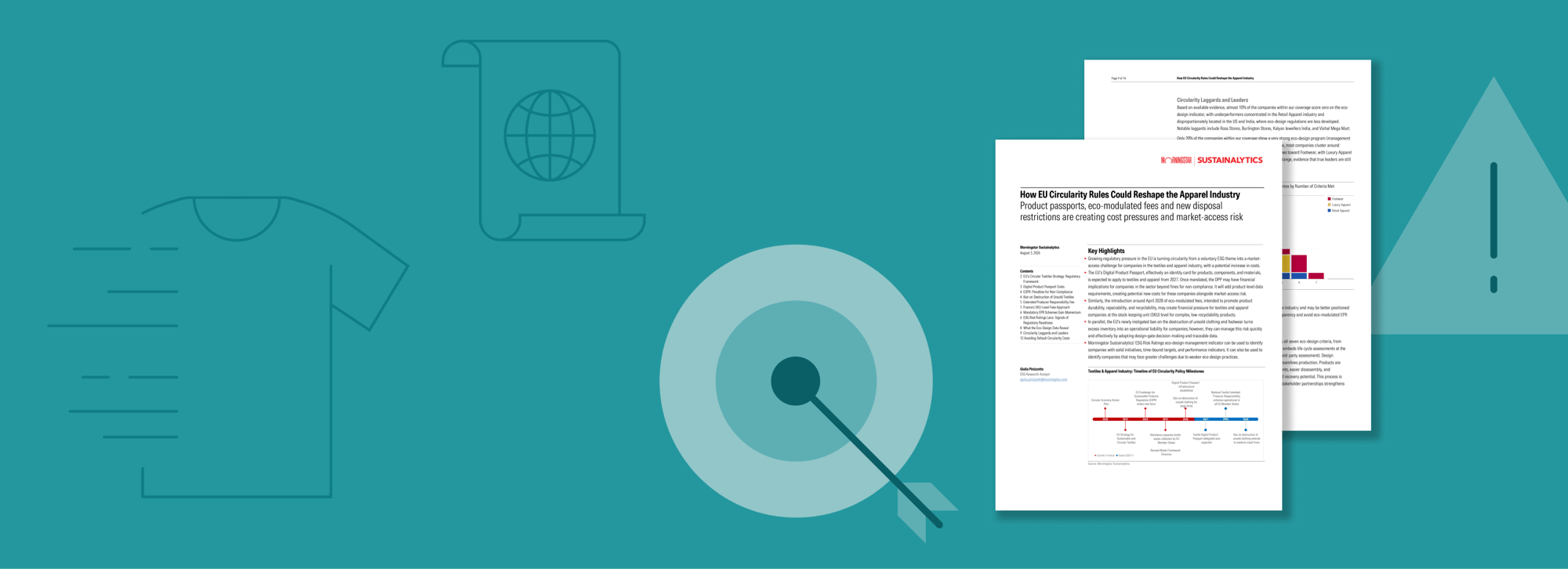
The European Union is rapidly transforming circularity from a sustainability ambition into a business imperative. New regulations, including Digital Product Passports (DPPs), eco-modulated Extended Producer Responsibility (EPR) fees, and restrictions on the destruction of unsold goods, are poised to reshape cost structures, compliance requirements, and competitive dynamics across the textiles and apparel industry.
This report examines how emerging EU circularity rules could create new risks and opportunities for apparel companies, using Morningstar Sustainalytics' ESG Risk Ratings framework to identify industry leaders and laggards. The report explores how product-level transparency requirements could affect supply chains, and why eco-design capabilities are becoming a key indicator of regulatory readiness.
In this report, you'll learn:
- How Digital Product Passports could introduce new costs, compliance obligations, and market-access risks for apparel companies.
- Why eco-modulated EPR fees may financially reward durable, repairable, and recyclable products while penalizing less sustainable designs.
- Which apparel business models are most exposed to upcoming EU circularity regulations and inventory management requirements.
- How Sustainalytics' ESG Risk Ratings and eco-design management indicator can help identify companies better positioned for the circular economy transition.